Kunming
Guandu Ancient Town: free entry, hours and how to get there
Guandu is a free old town on Kunming's southeast side, once a ferry landing on Dianchi Lake, with temples, pavilions and shrines from the Tang to the Qing packed into a small area. The main street is commercial, but the stone pagodas, carved temple halls and local snacks reward a slow visit. It pairs naturally with the Yunnan Provincial Museum next door.
- Entry
- Free
- Opening hours
- Open all day
- Time needed
- 2–3 hours
- How to book
- No booking needed
- Children
- Free
- Seniors
- Free
Free, open all day. Home to the Ming-dynasty Diamond Throne Pagoda (Jingang Ta).
Prices checked November 2026.
How to get there
- Metro Line 1 to Xingyao Road (星耀路), Exit A1. A ¥1 shuttle bus runs from near the exit to the museum and the old town; there is no sign, but an announcement plays inside the station. In 2025 visitors waited up to 20 minutes. Ignore drivers touting taxis at the exit.
- Bus 31 to Guandu Old Town (官渡古镇). From the Yunnan Provincial Museum, walk about 10 minutes along Yunxiu Road (云秀路) to the west gate.
- By taxi, about 10 minutes from Xingyao Road station or 25 minutes from the center. Show 官渡古镇.
The route, step by step
A day on foot of about 5 hours, from the temples in the morning to the opera stage at dusk. The stops below cost nothing apart from food. If you only have half a day, do the first four steps after a morning at the museum.
09:30 Visitor centre: map and stamp
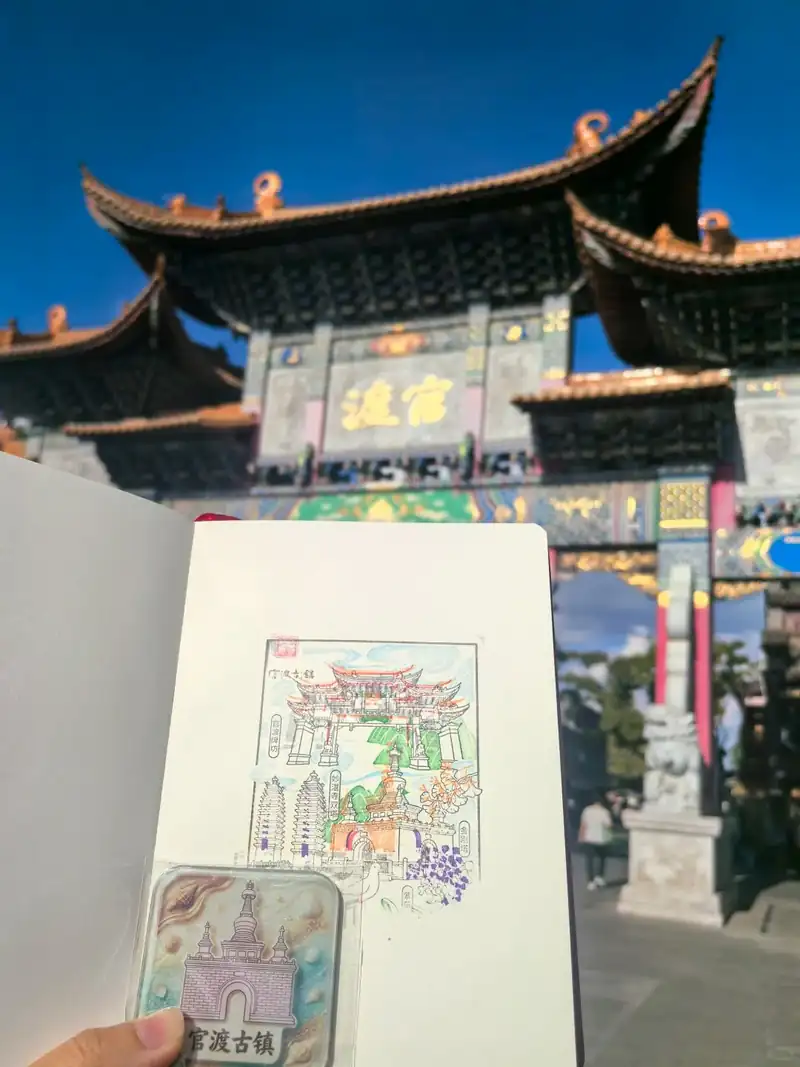
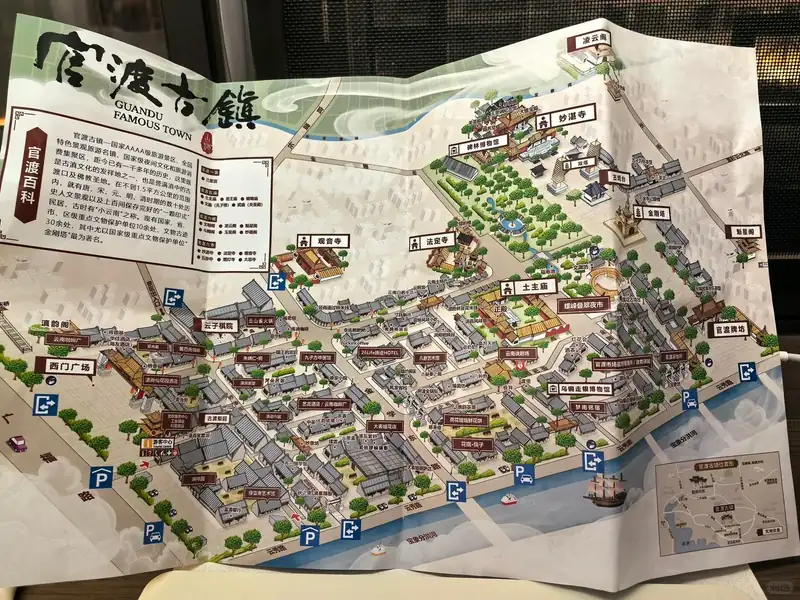
Start at the visitor centre by the main arch. Pick up the free paper map, which shows the six temples, seven pavilions and eight shrines the town is known for, and collect the commemorative stamp if you keep a travel book.
09:45–10:45 Diamond Throne Pagoda and Miaozhan Temple
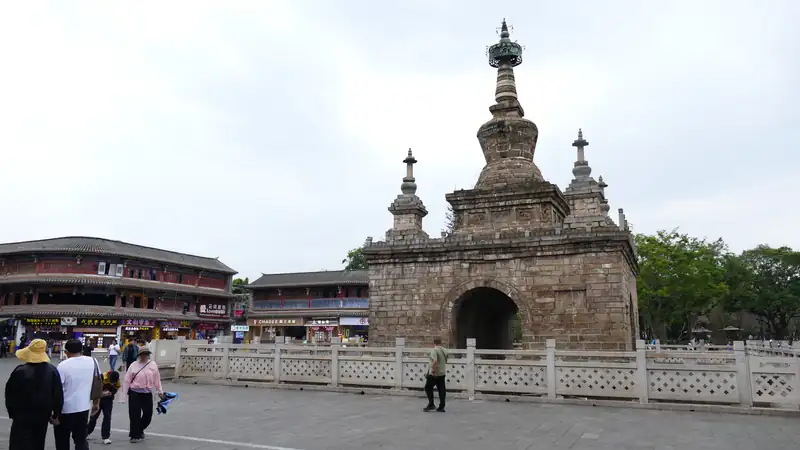
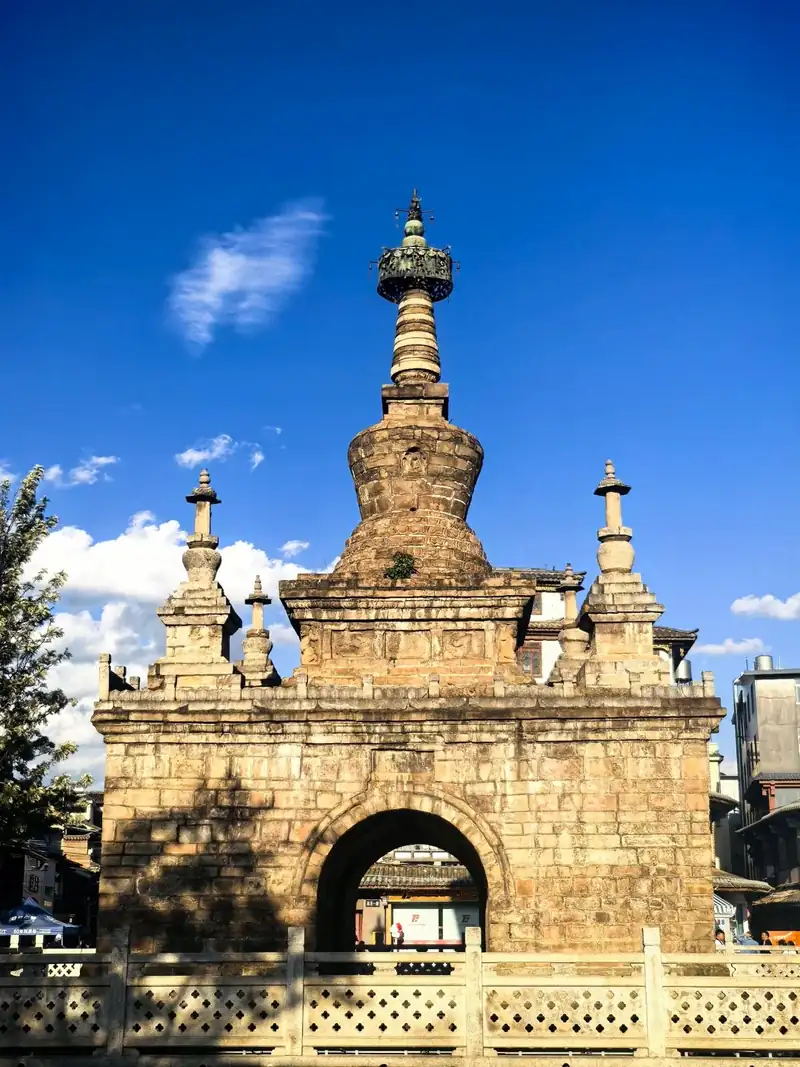
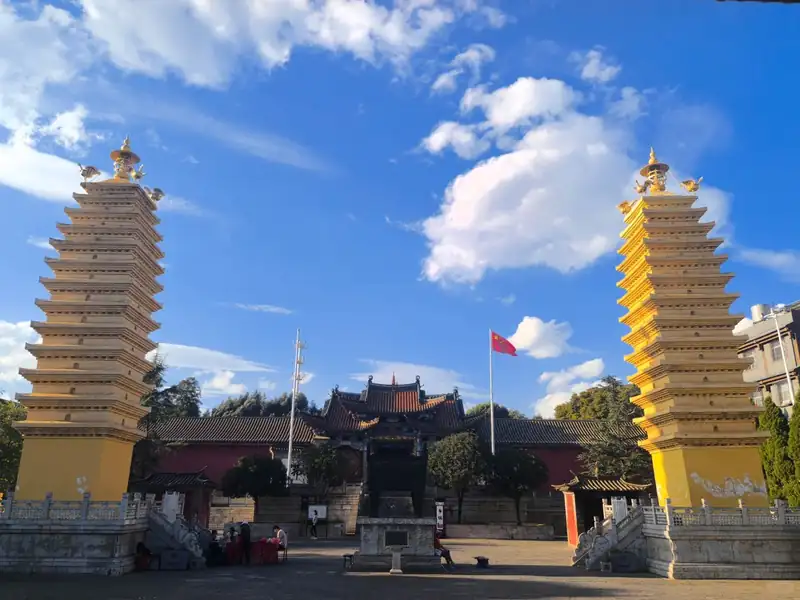
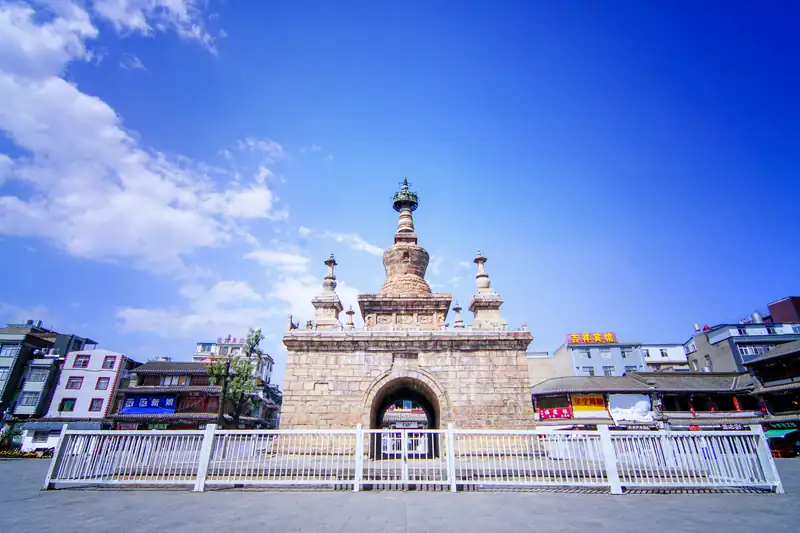
The Diamond Throne Pagoda (金刚塔), finished in 1458, is the oldest sandstone pagoda of its kind in China: a square base with four small towers around a large one, and cross-shaped arches you can walk straight through. In 2001 the whole structure was jacked up by more than two metres to save it from flooding. Behind it, Miaozhan Temple (妙湛寺) has a pair of 13-tier brick pagodas, the east one original and the west one rebuilt after an earthquake.
10:45–11:15 Fading Temple's carved eaves
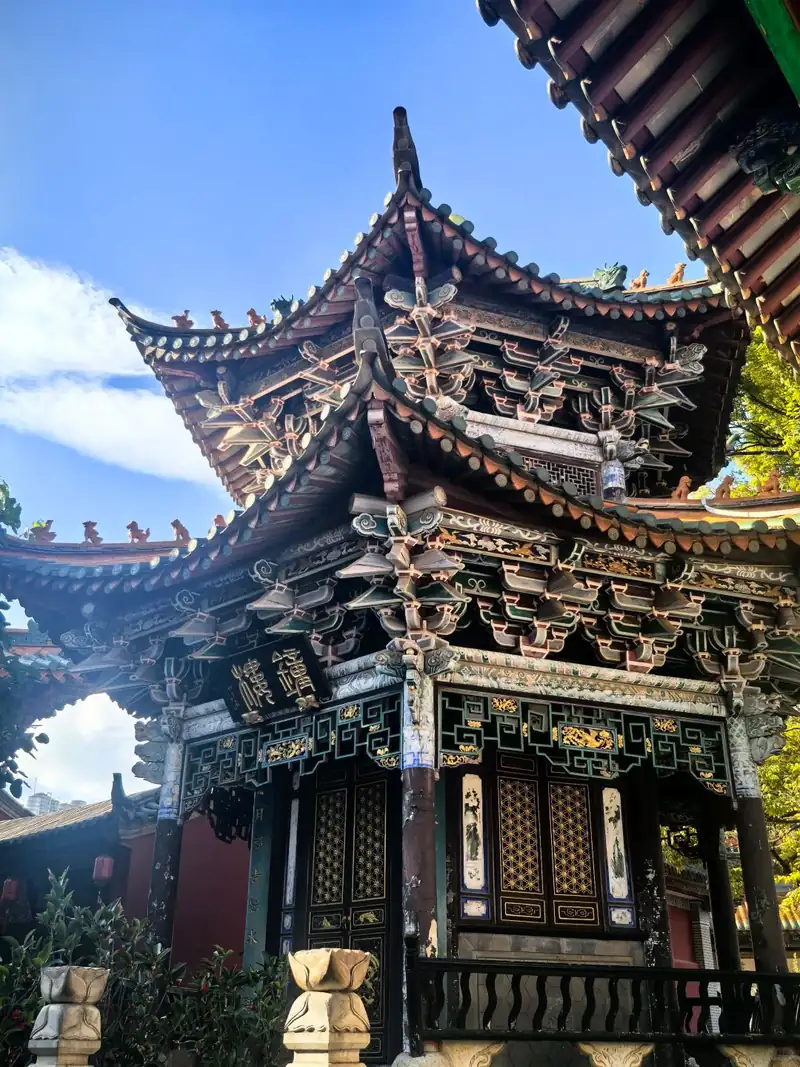
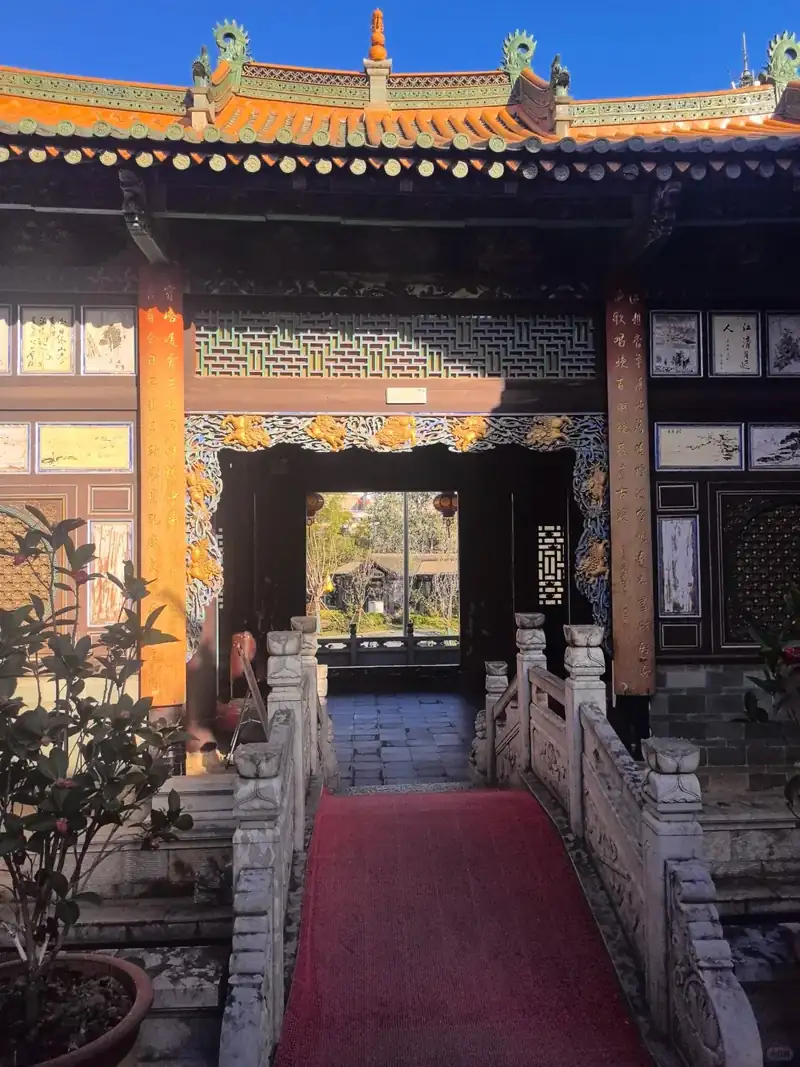
Fading Temple (法定寺) dates back to the Dali Kingdom, with later rebuilds. Look up at the wood carving: paired phoenixes facing the sun under the eaves, small qilin on the tops of the pillars and birds on the beam ends. It is quiet, with old trees in the courtyard.
11:15–12:30 Temple vegetarian lunch
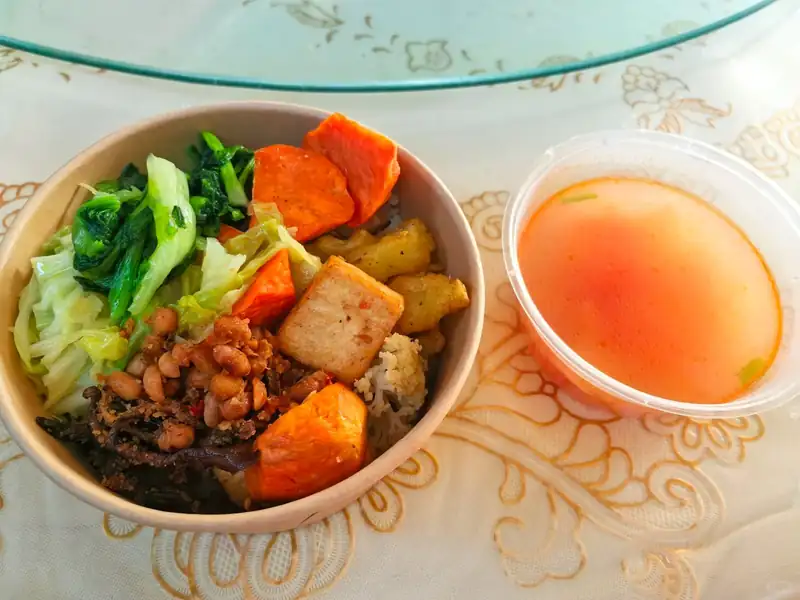
Miaozhan Temple serves a self-service vegetarian lunch from 11:00 to 12:30, and dinner from 17:30 to 18:30, for ¥10 a person (November 2026). Take only what you will eat. If you prefer a restaurant, crossing-the-bridge noodles with wild mushrooms are the local favourite around the old town.
12:30–13:30 Old streets and Guandu baba
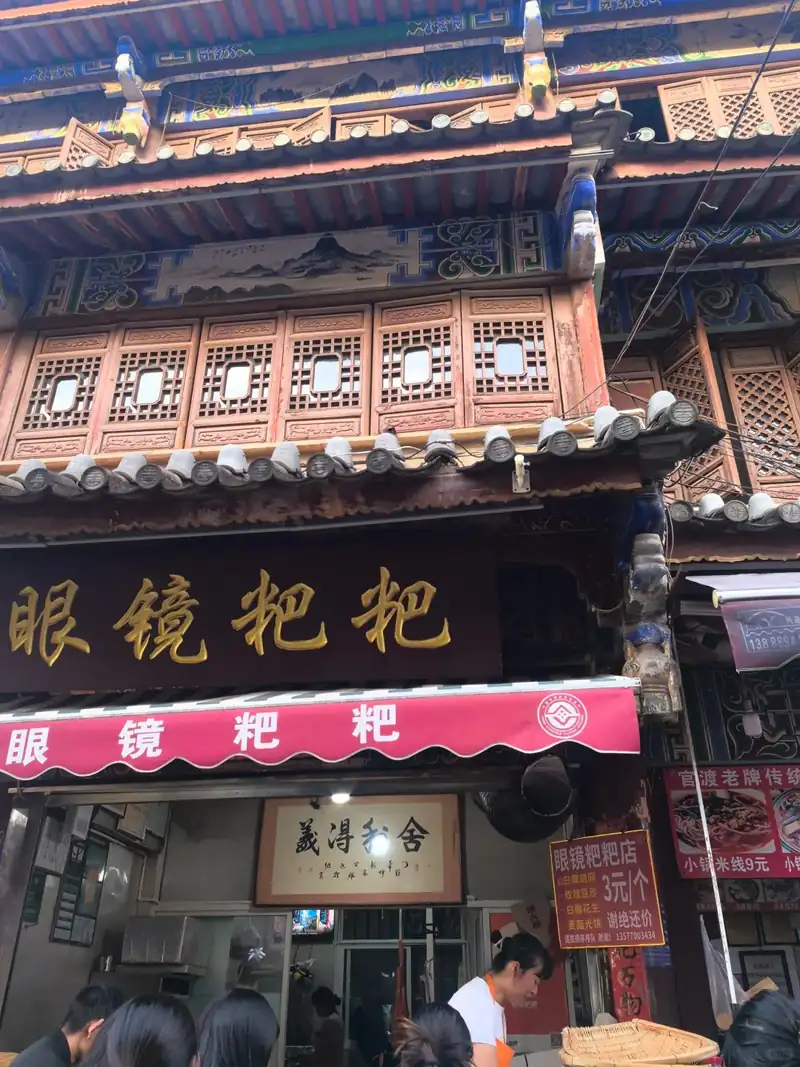
Wander the stone-paved Zhuangyuan Street (状元街) and Jingang Street (金刚街). Guandu baba (官渡粑粑) is the snack to try: a griddled flatbread at about ¥3 to ¥5, plain or filled with red bean or perilla seed. Eat it hot; it goes tough when cold. Small-pot rice noodles divide opinion.
13:30–15:00 Tuzhu Temple and the stele museum
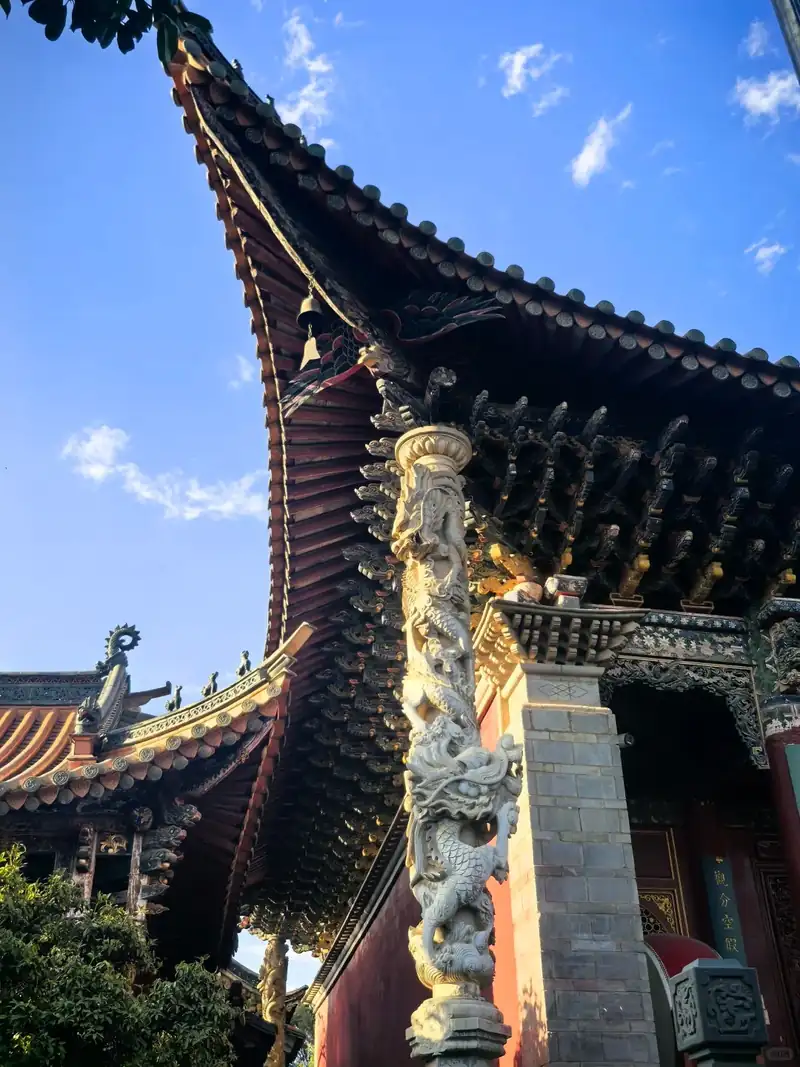
Tuzhu Temple (土主庙) was founded in the Nanzhao period more than 1,200 years ago and is dedicated to Mahakala; its Qing main hall has layer upon layer of ornate brackets, and in autumn the persimmon trees in the courtyard turn orange. Nearby, the Kunming Stele Forest Museum (碑林博物馆) is free with no booking, shady and quiet, with centuries of carved calligraphy.
15:00–16:30 Guanyin Temple, Lingyun Pavilion and the old bridge
For the quietest corner, walk to the small Guanyin Temple (观音寺), built on a bed of ancient lake snail shells, then to Lingyun Pavilion (凌云阁) beside the Baoxiang River and the Guangji Bridge (广济古桥), where boats once landed. Few tour groups come this far.
Evening Yunnan opera and a mushroom hotpot
After 17:30 the light is soft on the pagodas. The old opera stage (navigate to 古渡梨园) puts on Dian opera, Yunnan's local style; show times were not posted online, so ask at the visitor centre. For dinner, the wild mushroom chicken hotpots near the old town run about ¥100 a person.
Which walk to choose
- After the museum Walk over from the museum, see the Diamond Throne Pagoda and twin pagodas, Fading Temple, then eat Guandu baba on the old streets.
- Full day in the old town Visitor centre, the pagodas, Fading Temple, temple lunch, old streets, Tuzhu Temple, the stele museum and the quiet riverside corner. The order this page follows.
- Museum and old town The Yunnan Provincial Museum in the morning (closed Mondays, book ahead), then the old town from lunch until the evening opera.
What goes wrong, and how to avoid it
- The main street is commercial. The central street sells silver, pu'er tea and souvenirs like any Chinese old town. The temples and the side streets are the reason to come; do not judge the place by the main drag.
- Ignore taxi touts at the metro exit. A ¥1 shuttle runs from Xingyao Road station to the old town and the museum. Wait for it, or book a DiDi rather than taking an unmetered ride.
- Do not make it your only Kunming day. Several visitors felt the town alone was not worth a special trip. Combine it with the museum, which is a 10-minute walk away.
- The museum is closed on Mondays. If you plan both, avoid Mondays and book the free museum slot in advance with your passport.
- Stone paving all day. Wear flat, comfortable shoes; the full loop with the outer temples is several kilometres on uneven stone.
Before you go
- Go on a weekday morning for the temples without crowds.
- Late afternoon light, from about 16:00 to 18:00, is best for photos of the pagodas.
- Hanfu fans often bring their own outfits; the temple courtyards and the red wall by the pagoda are the favourite photo spots.
- The Yunnan Provincial Museum is a 10-minute walk away; Kunming's Haihong Wetland gull spot is a short ride further south.
Who should skip it
Skip it if you have already seen Lijiang or Dali old towns and are not interested in temples; come for the pagodas and the museum, not the shopping street.
Common questions
Is Guandu Old Town free?
Yes. The old town is free and open all day. In 2026 visitors reported no entry charge for the temples on this route, and the stele museum is free with no booking.
How do I get to Guandu Old Town by metro?
Take Line 1 to Xingyao Road, Exit A1, then the ¥1 shuttle bus to the old town, or a 10-minute taxi.
How long do I need?
About 2 to 3 hours for the pagodas, temples and snacks, or a full day with the museum or the evening opera.
What should I eat in Guandu?
Guandu baba, the local griddled flatbread, eaten hot; a ¥10 vegetarian lunch at Miaozhan Temple; and wild mushroom hotpot or crossing-the-bridge noodles for a bigger meal.
Close by, same day
- Yunnan Provincial Museum · Free
- Haigeng Dam (Dianchi Lake) · Free
Going to several of these?
Tell us which sights and when. We’ll tell you what needs booking ahead and what’s worth skipping, and book the tickets that need a Chinese app.